Sweden Tightens Duty of Care Rules as Channelisation Falls
Sweden’s Gambling Authority opened a consultation on 16 June 2026 to replace the current LIFS 2018:2 responsible gambling framework, with comments due by 10 August 2026. The draft applies to licence holders under spellagen (2018:1138) and defines operating terms such as autoplay, pace of play and excessive gambling, narrowing the room operators have to call duty of care expectations vague.
The new rules list specific player risk factors operators must track: long sessions, repeated play across a day or week, night play between 00:00 and 06:00, rising deposits or stakes, monthly deposit limits above SEK 10,000, failed deposit attempts and a return after self-exclusion. Operators must also weigh contact signals like aggressive behaviour or a player’s own concern about their gambling.
If a player shows signs of excessive gambling, defined as behaviour causing or risking financial, social or health harm, the operator must act immediately with measures matched to the risk level. The draft also requires operators to explain how they give extra consideration to players aged 18 to 24.
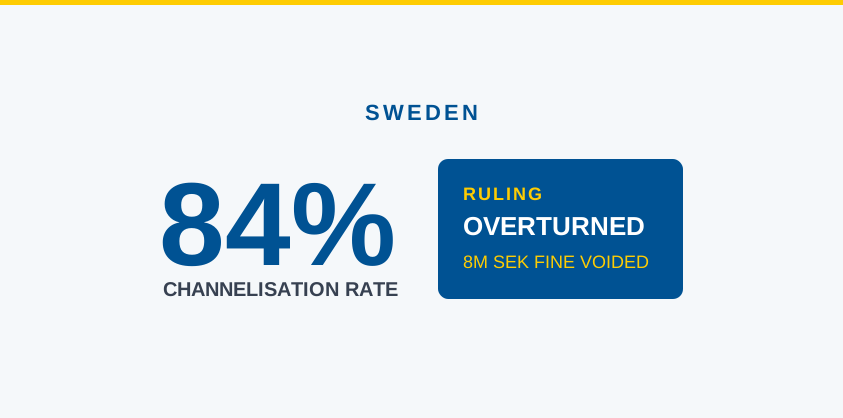
The timing adds pressure. Spelinspektionen’s 2025 data show channelisation at 84%, down from 85% in 2024, with online casino lagging far behind betting: 81% versus 96%, and an internet traffic indicator of just 68% for online casino. The regulator addresses the trade off directly in its impact assessment, arguing that weak responsible gambling standards are not the right tool against unlicensed operators.
The consultation also follows a setback for the regulator. On 12 June 2026, the Administrative Court in Linköping overturned Spelinspektionen’s March 2025 decision against Roar Vegas Ltd, the LeoVegas operator in Sweden. The original sanction was a SEK 8 million fee over three customer cases out of twelve reviewed. The court found the regulator’s evidence did not support the breach.
💡 TGJ Take
Sweden is turning duty of care from a principle into an operating manual. Spelinspektionen wants earlier intervention, but the Linköping court just showed it needs stronger proof to back enforcement. Operators should treat the draft’s risk factors as a documentation checklist, not a future debate. Compliance teams that can show a clear audit trail per customer will be far better placed than those relying on judgement calls after the fact.