Senate Targets Sports Betting Integrity as Match-Fixing Cases Mount
The Senate Commerce Subcommittee on Consumer Protection, Technology, and Data Privacy will convene the hearing, titled “No Sure Bets: Protecting Sports Integrity in America,” as federal investigations into athlete bribery, insider betting, and gambling-related corruption continue to expand across U.S. sports.
The hearing follows the rapid growth of legal sports betting since the Supreme Court overturned PASPA in 2018. Sports betting has grown into what lawmakers described as a $165bn U.S. market, now allowed in 39 states and the District of Columbia. Senators will examine current state-led oversight as sportsbooks, prediction markets, and sports leagues become more closely linked.
Senator Marsha Blackburn, who chairs the subcommittee, said recent scandals exposed weaknesses in current protections around competition integrity and youth exposure to betting products. Senate Commerce Committee Chairman Ted Cruz added that fans “shouldn’t have to wonder” if player performance was influenced by gambling interests.
Federal probes intensify pressure on regulators
The hearing comes as federal prosecutors pursue multiple gambling-related investigations tied to basketball corruption schemes in both the NCAA and professional leagues.
In Pennsylvania, prosecutors recently charged 26 people in an alleged point-shaving operation that authorities say stretched from the Chinese Basketball Association into NCAA Division I basketball. According to the indictment, fixers allegedly bribed players with payments ranging from $10,000 to $30,000 to manipulate point spreads and first-half betting markets.
Federal filings claim the scheme involved 39 players across at least 17 NCAA programs and affected games through February 2025. Schools named in the case include DePaul, Georgetown, Tulane, Buffalo, and Kennesaw State. Several players have already been suspended or removed from team activities.
The NCAA said many of the allegations overlap with investigations already underway. NCAA President Charlie Baker stated that the organization had “finished or have open investigations into almost all of the teams” named in the indictment.
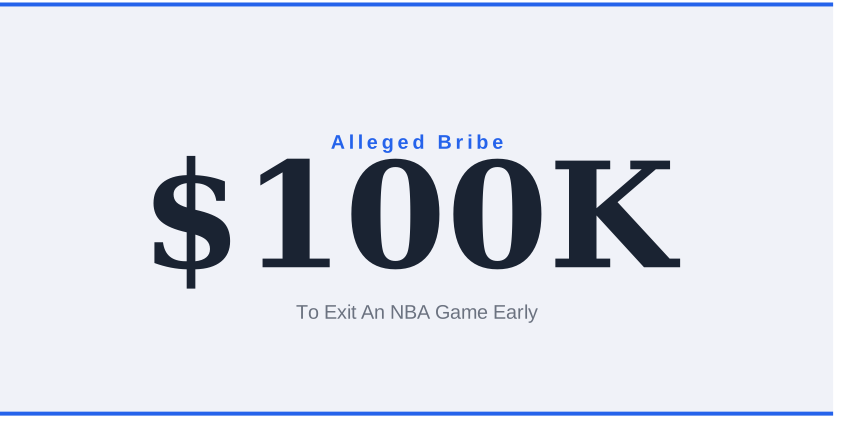
Separate federal investigations have also targeted alleged insider betting activity involving NBA figures. One source article claims Miami Heat guard Terry Rozier and Portland Trail Blazers head coach Chauncey Billups were arrested as part of a broader probe involving insider betting and Mafia-linked poker operations. However, those claims have not been independently confirmed through official league or court announcements included in the primary Senate hearing materials.
Prediction markets move into focus
The May 20 session will also mark one of the first formal Senate examinations of prediction markets and their connection to sports wagering.
Lawmakers recently approved a bipartisan Senate rule change prohibiting senators and staff from participating in prediction markets, citing concerns around insider information and public trust. The restriction follows increased scrutiny of operators such as Kalshi and Polymarket, which allow users to trade contracts tied to political, economic, and sporting outcomes.
The Senate hearing is expected to examine if prediction markets should face similar integrity and compliance standards as licensed sportsbooks.
Witnesses scheduled to testify include American Gaming Association CEO Bill Miller, Tennessee Sports Wagering Council Executive Director Mary Beth Thomas, Integrity Compliance 360 CEO Scott Sadin, and Coalition for Prediction Markets Senior Advisor Patrick McHenry.
The hearing will revisit many of the same issues discussed during a Senate session in late 2024, when lawmakers debated a larger federal role in sports betting oversight instead of leaving regulation primarily to individual states.
💡 TGJ Take
The biggest risk for operators is not another integrity scandal itself — it’s Congress deciding state regulation is no longer enough. If lawmakers conclude that sportsbooks and prediction markets create overlapping integrity risks, the industry could face federal monitoring standards, mandatory data-sharing rules, or tighter advertising restrictions. Prediction markets are now directly entering the gambling policy conversation rather than operating in a separate financial-regulation lane. Operators, affiliates, and suppliers tied to U.S. sports betting should pay close attention to how lawmakers frame “integrity,” because that language often becomes the foundation for future compliance obligations.