Malta Vows EU Budget Veto Over €4bn Gambling Levy
Malta’s Prime Minister Robert Abela told parliament this week that his government will veto the EU’s next budget if it includes an online gambling levy, with online gambling worth about 10% of the country’s GDP. European Parliament Vice President Victor Negrescu is pushing the levy, estimated at €2bn to €4bn a year, as part of new revenue sources for the 2028–2034 Multiannual Financial Framework, a €2 trillion budget.
Negrescu argues the gambling sector should face EU level taxation because it benefits from the bloc’s single market and digital infrastructure while operating under fragmented national rules. He has paired the levy proposal with a call for stronger EU action against unlicensed operators.
The levy remains a proposal, not confirmed policy. It is one of several fallback revenue options MEPs backed in April, alongside a digital services levy and a carbon border adjustment mechanism.
Malta’s veto threat carries weight because EU budget approval requires unanimity in the Council. Poland and Hungary used the same leverage during the 2020 budget talks, when both countries won concessions by threatening to block the MFF over rule of law conditions. Malta is also part of Friends of Cohesion, a 16 nation bloc focused on regional funding, which could back its position.
This is not Malta’s first clash with Brussels over gambling. Bill 55, now Article 56A of the country’s gambling act, has shielded local operators from repaying hundreds of millions of euros in player refund settlements ordered by foreign courts. The European Commission has opened infringement proceedings against Malta over the law, and the Court of Justice of the European Union is expected to rule against it.
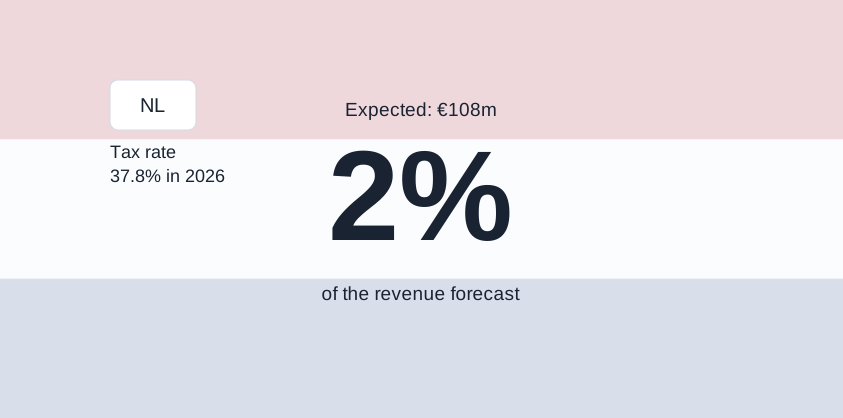
Tax pressure on operators is already high across Europe. The Netherlands taxes GGR at 37.8%, with channelisation down to 55% despite no clear revenue gain, according to a government report this week. France taxes online betting at 59.3% of GGR, and Portugal applies an 8% turnover tax.
Council leaders have agreed to reach a preliminary MFF deal by October. Budget approval is expected in late 2026 or early 2027.
💡 TGJ Take
The real signal here isn’t Malta, it’s that EU institutions now see online gambling as an easy revenue target whenever budget talks get hard. A €2bn to €4bn levy is small relative to the €2 trillion MFF, which means it survives political horse trading as a concession chip even if Malta wins this round. Operators in high tax markets like France and the Netherlands should expect this idea to resurface in the next budget cycle regardless of October’s outcome. The more durable risk for Malta based operators is still the CJEU ruling on Article 56A, which carries refund liabilities the levy fight has overshadowed.