Dutch Tax Hikes Yield €2m of Promised €108m in 2025
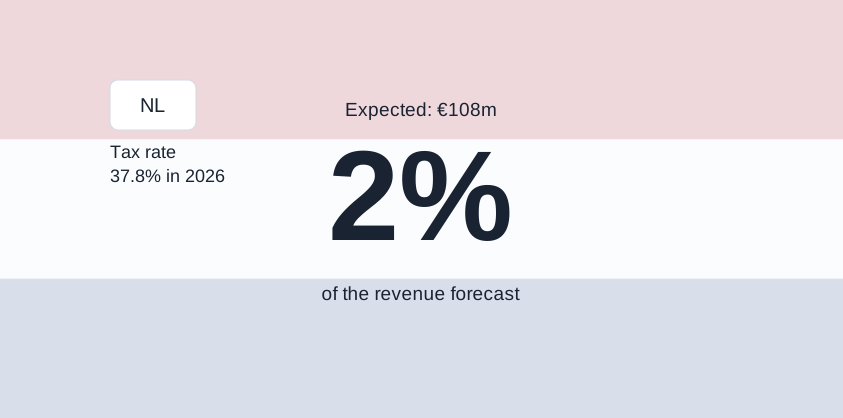
The Dutch Ministry of Finance and the Kansspelautoriteit (KSA) confirmed in a joint monitoring report that the country’s gambling tax increases have missed revenue forecasts by a wide margin. The rate rose from 30.5% to 34.2% on 1 January 2025 and to 37.8% in 2026, with original projections pointing to €108m in extra revenue for 2025 and €216m for 2026. The state collected only around €2m in 2025, and the 2026 figure is expected to reach €57m.
The report attributes the shortfall mainly to a shrinking tax base rather than the rate itself. Player protection measures, including monthly deposit limits of €700 for players over 24 and €300 for those aged 18 to 24, reduced operators’ gross gaming revenue (GGR), which lowered the taxable base directly. The higher tax burden added further pressure on land-based venues, with the number of licensed gaming locations already falling faster than the historical average and contributing to the shortfall.
The mechanism is straightforward. A higher rate applied to a smaller market does not produce more revenue if the market shrinks faster than the rate increases. The KSA’s broader monitoring also shows channelisation, the share of gambling spend staying within the licensed market, sliding below 50% during the period covered by the report, as tighter limits pushed some player spend toward unlicensed sites that do not apply the same restrictions.
The shortfall stands in contrast to the market’s longer-term trajectory. CBS data shows gambling tax revenue hit a record €1bn in 2024, up roughly 75% from five years earlier. Online gambling, legalised in October 2021, accounted for an estimated €0.4bn of that total. That growth predates the 2025–2026 tax hikes and is not linked to them.
The monitor also reviewed market size and contributions to charity and sport. It found no firm conclusions on these points, since tighter player protection rules and advertising restrictions changed at the same time as the tax rate. This overlap makes it difficult to isolate the tax policy’s specific effect from the rest of the regulatory shift.
💡 TGJ Take
The numbers settle a debate that should never have needed settling: taxing a shrinking base harder accelerates the shrinkage, it does not rescue the budget. The Ministry forecast on a static GGR while running player protection rules in parallel, the same rules that cut the base it was about to tax more. That is a design flaw, not bad luck. For operators, margin planning should assume 37.8% is a floor through 2027, not a ceiling. Land-based venues should treat the closures already cited in the report as a leading indicator, not a footnote.