Kalshi Targets Brazil Reversal as Weekly Volume Hits $4bn
Kalshi co-founder and COO Luana Lopes Lara said the company still wants to enter Brazil and will pursue a reversal of the country’s prediction market ban through direct talks with the government. Speaking to Bloomberg Línea ahead of Web Summit Rio on June 8, Lara described working constructively with Brazilian authorities as the company’s primary approach, rather than moving straight to litigation.
Brazil acted against prediction markets in late April, when the Ministry of Finance and telecoms regulator Anatel treated platforms including Kalshi and Polymarket as irregular betting operators. The move followed a central bank resolution that restricted derivatives markets to economic and financial references, barring contracts tied to sports, politics, elections and entertainment unless the securities regulator determines a valid financial basis exists.
For Kalshi, the dispute is about how the product is classified, not whether it should be regulated. Lara told Bloomberg Línea that Kalshi operates as an exchange, matching users against each other and earning transaction fees rather than taking the opposite side of a trade. That structure, she argues, is fundamentally different from a sportsbook or casino, where the operator profits when customers lose.
Lara also argued that blocking prediction markets pushes activity offshore, reducing tax collection, consumer protection and the ability to trace funds. Brazilian regulators appear less persuaded: their concern extends beyond Kalshi’s fee model to the broader risks of event-based wagering, integrity exposure and politically sensitive contracts reaching retail users.
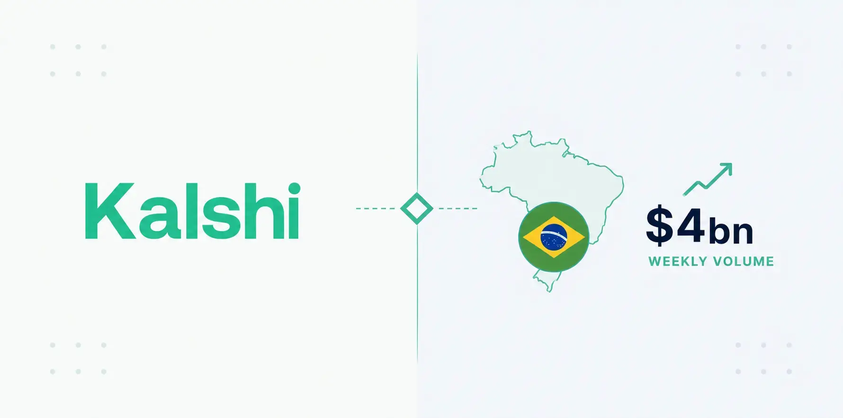
Kalshi’s track record suggests the company will not walk away quickly. Founded in 2018 by Lara and Tarek Mansour, it spent years in legal disputes with the U.S. Commodity Futures Trading Commission before launching in 2021. A second legal win in 2024 allowed it to offer election contracts in the United States, after which it expanded into macroeconomic events, politics and major sports markets. Lara said the platform has grown 15 times over the past six to eight months and now processes more than $4 billion in weekly volume. Its latest public valuation stands at around $22 billion.
The outcome in Brazil depends on a classification question the country has not yet resolved. If authorities treat prediction markets as financial infrastructure, Kalshi has a path. If they treat the product as gambling regardless of its mechanics, the company faces either a betting-style compliance route or an indefinite block.
💡 TGJ Take
Brazil is not just a market Kalshi wants to enter. It is the first major test of whether Latin America’s largest regulated betting market will treat prediction markets as a separate product category or fold them into the existing gambling framework. The distinction matters for the whole region. If Brazil draws a line between exchange-based event contracts and sportsbooks, other LATAM regulators will have a template to follow or reject. If it does not, prediction market platforms face years of ad hoc treatment across each jurisdiction. For operators and suppliers already invested in the Brazilian market, the more immediate question is whether Kalshi’s push accelerates regulatory scrutiny of the broader category, including hybrid products that already sit on the edge of what licensed betting operators are permitted to offer.