Kaizen Acquires GameplAI to Bring AI Trading and Pricing In-House
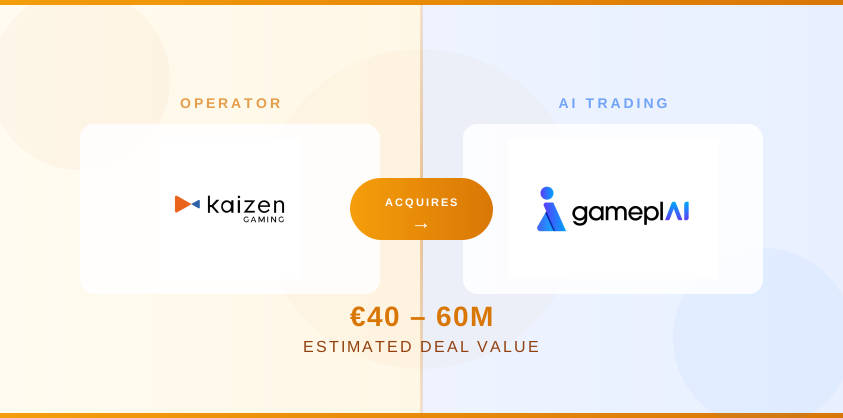
Kaizen Gaming confirmed in March 2026 that it has acquired UK-based AI trading provider GameplAI, bringing key sportsbook capabilities in-house as it scales Betano across regulated markets. The deal value was not disclosed, though industry estimates place it between €40m and €60m. GameplAI will continue to run its B2B operations alongside the integration.
The move focuses on pricing control and product depth. GameplAI’s models are used to generate player props, micro-markets and in-play scenarios. Owning that layer allows Kaizen to update odds faster, react to live data with shorter latency, and expand market coverage without depending on third-party providers.
Kaizen said the integration will target trading automation, risk tools and market generation across its sportsbook. This includes improving how odds are adjusted during live events and how exposure is managed across large betting volumes. Large operators have started to internalise trading functions to protect margins and improve product speed, and this deal follows that direction.
GameplAI, founded in 2021, supplies AI-driven trading tools to operators including Betsson and Superbet. Its founders will stay on after the deal, and the company will continue serving external clients, keeping its B2B revenue stream active. That allows Kaizen to benefit from the technology without shutting down an existing supplier business.
The structure gives Kaizen direct control over trading performance while keeping GameplAI active as a supplier. That limits disruption to existing clients and keeps the company present across multiple operator environments, which can support further data input and model development over time.
TGJ Take
Kaizen now controls a part of the sportsbook that most operators still outsource. Faster pricing and broader in-play coverage can improve retention and betting volume, especially in football-heavy markets. Suppliers offering similar AI tools face a tougher pitch when operators start building internally. Mid-tier brands that rely on external trading stacks risk falling behind on speed and product depth.