Italy Gaming Tax Revenue Drops €186m in Early 2026 as Retail Activity Slows
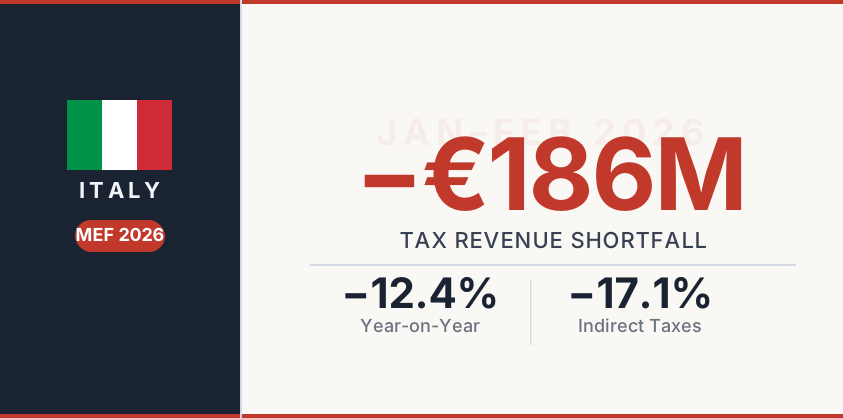
Italy’s Ministry of Economy and Finance (MEF) recorded €1.31 billion in gambling tax revenue across January and February 2026, down €186 million from the same period last year. The year-on-year decline stands at 12.4%, with most of the drop coming from indirect taxes tied to gaming activity.
Most of the decline comes from indirect taxes linked to gaming. That segment fell by 17.1%, which points to weaker activity in retail and machine-based play. Other tax lines did not move in the same way, so the change is specific to gambling.
The first signal appeared in January, when intake came in well below last year’s level. February did not reverse the trend. Taken together, the two months show the same direction.
Part of the shift sits in how retail gambling now operates. New limits on land-based operations and tighter control over payment flows reduce the use of cash. Indirect taxes depend heavily on those transactions, so even small changes in volume show up quickly in the data.
The pressure is already feeding into policy. A €250 million gap in slot-related tax revenue has pushed the government to move faster on land-based reform, with an April 2026 deadline set for updated rules. The current work centres on resizing the retail network and adjusting how it fits within the latest framework.
For operators, the picture is changing. Retail channels bring in less volume, while online activity comes with stricter rules and tax treatment. That shifts both margins and how stable revenue looks from one period to the next.
TGJ Take
The early-2026 figures highlight how dependent Italy’s tax intake remains on retail activity. When cash-based play declines, the fiscal impact shows up immediately. Operators with land-based exposure face lower volumes and tighter controls at the same time. For suppliers and affiliates linked to retail distribution, this is a signal to rebalance toward channels that continue to generate consistent turnover.