QTech Expands Live Supply With Yeebet and REBEL Deal
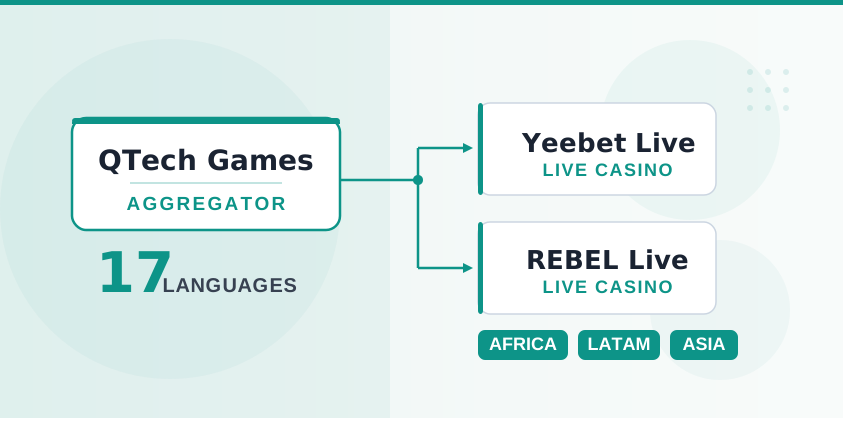
QTech Games confirmed on March 10, 2026, that it has integrated Yeebet Live and REBEL Live into its aggregation system, expanding its live casino offer for operators in Africa, LATAM, and Asia. The agreement gives clients access to both suppliers through a single integration, with one interface across multiple live studios.
The rollout includes core live casino titles such as blackjack, roulette, and baccarat, along with region-specific tables. QTech stated that the combined offer supports more than 17 languages and includes features such as side bets and localised table formats. Operators can activate the content through the existing QTech setup without separate integrations.
The deal follows a series of supplier additions by QTech in recent months. The company has focused on building a broader catalogue that operators can deploy quickly, rather than introducing new game mechanics. Its model allows operators to manage several providers through one system and reduce onboarding time.
Yeebet and REBEL both operate across multiple studios. This increases table availability and helps handle peak traffic, especially in markets where a single studio setup can reach capacity. By grouping both suppliers under one interface, QTech increases the number of active tables operators can offer without adding technical complexity.
For operators, the integration reduces reliance on one live supplier and allows more control over content mix and pricing. It also supports faster entry into new markets, where direct integrations with each provider can delay launch timelines.
The move reflects a shift in live casino distribution. Aggregators are no longer focused only on slots. Live content is becoming part of the same model, with suppliers added in layers to increase coverage and uptime.
TGJ Take
The focus here is scale and speed. By adding more live suppliers, QTech gives operators access to a larger pool of tables without extra integration work. That matters in regions where uptime and table availability can limit growth during peak hours. Smaller operators get access to setups that would normally require multiple direct deals. At the same time, suppliers face more competition inside the same system, which can push pricing down and reduce long-term exclusivity.