
Malaysia Moves to Tighten Esports Rules as Market Hits RM1.6bn
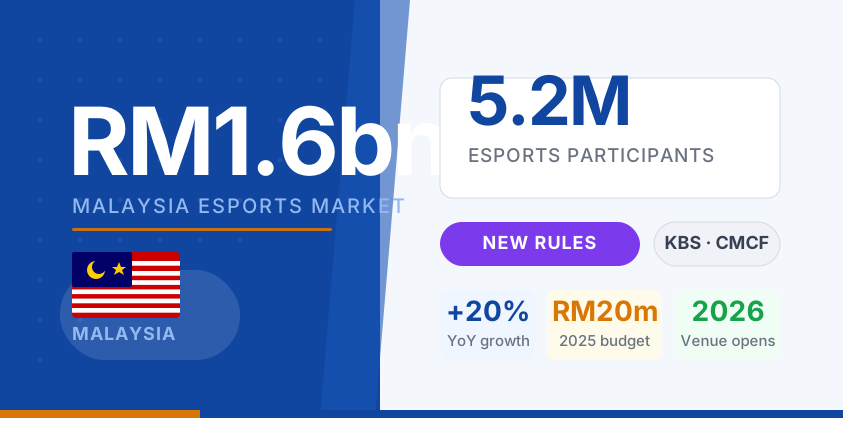
In late February 2026, the ministry confirmed the update as the number of players passed 5.2 million. The rules will include player contracts, event organisation, and youth protection. At the same time, CMCF is preparing a gaming sub-code to set clear standards for content, community behaviour, and child safety.
The guidelines are still in progress, but the direction is clear. The Ministry of Youth and Sports wants to bring more structure to esports, from amateur teams to professional setups.
Mediha Mahmood, CEO of CMCF, said talks with platforms, developers, and community groups showed gaps in user protection and content control. She said user behaviour, safety, and content rules are closely linked. CMCF is now working on a sub-code that will set clear standards for moderation and child protection.
The move comes as the esports sector in Malaysia keeps growing. Analysts estimate the market reached RM1.6bn in 2025, with growth of about 20% from the year before. More than 5.2 million people now take part in esports activities. Projections show further growth in the coming years, supported by strong interest from younger users.
Government support has played a role in that growth. The 2025 budget set aside RM20m for esports development, including funding for infrastructure in Kuala Lumpur. Plans for a new venue have shifted to a retrofitted arena at KL Sports City in Bukit Jalil, expected to open in 2026. The wider plan is to position Malaysia as a regional esports hub, with backing from several ministries.
For operators, platforms, and organisers, the direction is clear. Rules around content, especially violent material, are likely to become stricter. Teams and players may face more formal contracts and compliance checks. Sponsors and suppliers will need to adjust to these standards as the sector moves from growth to tighter oversight.
TGJ Take
Malaysia is starting to set clear rules for esports, not just support its growth. Operators and platforms will need to follow stricter content and moderation rules. Teams and organisers will face more formal contracts, especially with younger players. Sponsors and suppliers will need to work with partners that meet these standards. The market is growing, but rules are now catching up.