Unregulated Gambling Hits $5.9T as Regulators Lose Market Share
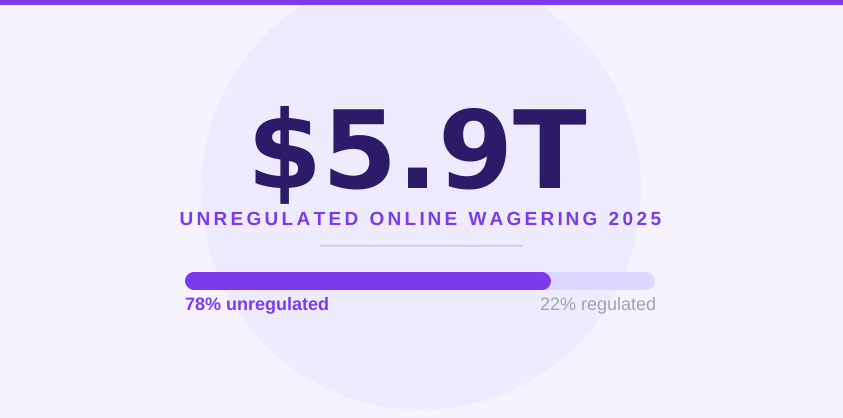
Gaming Compliance International (GCI) claims unregulated online gambling reached US$5.9 trillion in wager turnover in 2025, a figure larger than the GDP of every country except the United States and China. The estimate comes from the consultancy’s report, GCI Online Gaming 2025: Global, which argues regulators now control only a minority share of the online market.
According to GCI, regulated operators account for just 22% of global online gambling revenue. The other 78% flows through offshore or unlicensed operators that target consumers across multiple jurisdictions. The report estimates unregulated turnover rose from US$5.1 trillion in 2023 to US$5.7 trillion in 2024, before it reached US$5.9 trillion in 2025.
GCI CEO Matt Holt said the scale of the market means regulators no longer face isolated black-market activity.
“At US$5.9 trillion in wagering value, unregulated online gambling is one of the largest economic systems in the world, operating largely outside regulatory oversight,” Holt said.
“What this report makes clear is that regulators are not facing a marginal challenge, but a dominant one. The majority of activity is occurring beyond the regulated perimeter.”
Prediction Markets and Crypto Products Add Pressure
The report says the online sector has shifted from a simple regulated-versus-illegal split into what GCI calls a “three-sector marketplace.” Alongside licensed and unlicensed gambling, the company identifies a third category called “unacknowledged gambling.”
GCI defines this segment as products that copy gambling mechanics while they sit outside traditional gambling classification. Examples cited include prediction markets, crypto gambling products, sweepstakes casinos, skins trade and gambling-style contests distributed through social media channels.
GCI President Ismail Vali said consumers increasingly treat products from all three sectors as part of one market, regardless of legal status.
“The audience does not distinguish between these sectors. They experience one marketplace, where everything is accessible and everything competes equally,” Vali said.
The report also uses the term “White Noise Marketplace” to describe online spaces where regulated brands, offshore operators and gambling-adjacent products appear side by side across search engines, streaming services, affiliates and social media feeds.
GCI said its analysis excludes retail and land-based gambling activity and counts only operators that actively target and transact with local consumers.
Australia Shows the Enforcement Gap
The report lands as regulators and licensed operators in several jurisdictions push harder against offshore gambling networks. In Australia, Responsible Wagering Australia warned last year that consumers lose an estimated A$3.9 billion each year to illegal offshore operators, with projections set to reach A$5 billion by 2029.
The industry body has called for stronger enforcement tools, among them payment blocks, app store removals and wider powers against illegal gambling promotion on social media.
The GCI report adds pressure to current debates around prediction markets and crypto-based products, particularly in the United States, where regulators still disagree on how to classify them.
TGJ Take
The most important figure here is not the US$5.9 trillion headline number. It is the 22% regulated market share. If GCI’s estimates are even directionally accurate, licensed operators compete inside a smaller slice of total online wagers while offshore brands, crypto products and prediction markets pull users without the same compliance costs. For affiliates, this raises immediate risk across search, social and paid traffic, where regulated and unregulated offers often sit beside each other. Regulators face a structural problem: licence regimes move slowly, while gambling-adjacent products can reach global audiences in weeks.