Sportradar Lawsuit Turns Data Risk Into Investor Issue
Sportradar Group AG faces a securities class action in the U.S. District Court for the Southern District of New York over allegations that the company aided and abetted illegal gambling and derived part of its revenue from those activities. The case, Smale v. Sportradar Group AG, No. 26-cv-4112, covers investors in Sportradar Class A ordinary shares. The lead plaintiff deadline is July 17, 2026.
According to Bleichmar Fonti & Auld LLP, the complaint asserts claims under Sections 10(b) and 20(a) of the Securities Exchange Act of 1934. The lawsuit followed a sharp decline in Sportradar’s share price after two investigative reports put the company’s exposure to black and grey-market operators in question.
Sportradar is a global sports data and technology company that collects, analyzes and distributes real-time sports data to betting operators, leagues, media companies and teams. Its partners include the NBA, MLB, NHL and PGA Tour.
What the Company Said and What the Lawsuit Alleges
During the relevant period, Sportradar told investors it was “crucial” to conduct business in a way that upheld its standards of ethics and integrity. The company also stated it had a “four-level process” to confirm it worked only with licensed operators.
The complaint tells a different story. It alleges Sportradar actively aided and abetted illegal gambling across black and grey markets worldwide and derived a material portion of its revenue from those activities.
The Reports That Triggered the 22.6% Drop
On April 22, 2026, Muddy Waters published a report titled “Sportradar AG: Putting the BET into Aiding and Abetting.” The firm alleged that Sportradar’s business model “depends on illegal operators to survive” and estimated that unlicensed operators contributed around 20% to 40% of total revenue. Based on proprietary research and interviews with former employees, Muddy Waters identified nearly 50 Sportradar clients it said were active in illegal markets.
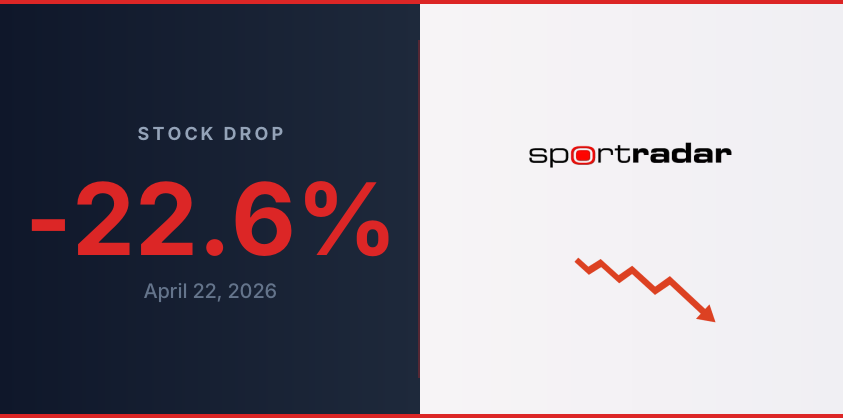
That same day, Callisto Research released a separate report. After a review of hundreds of gambling platforms, Callisto found evidence suggesting that one-third of platforms Sportradar claimed to serve were using its products or services, or explicitly claimed to do so, while operating illegally in regulated or prohibited markets. Callisto estimated exposure to unlicensed operators could be as high as 30% to 40% of Sportradar’s revenue. Three U.S. gambling regulators, Callisto noted, had already opened reviews into the company.Sportradar’s stock fell $3.80 per share on April 22, a 22.6% drop from $16.84 to $13.04.
Investors have until July 17, 2026 to petition the court for lead plaintiff status. Class members are not required to act now, and any potential future recovery does not depend on lead plaintiff status.
TGJ Take
This case extends well beyond Sportradar’s share price. If the allegations hold up in court, B2B data and odds suppliers across the industry will face pressure to demonstrate exactly how they screen customers, verify licences and ring-fence revenue from unlicensed operators. For operators, this is a reminder that data providers sit inside the compliance chain, not outside it. For listed gambling companies, the reputational and legal exposure from grey-market ties just acquired a concrete dollar figure: a 22.6% single-day loss.