New Zealand’s Online Casino Bill Heads for Third Reading as Operators Line Up for 15-Licence Auction
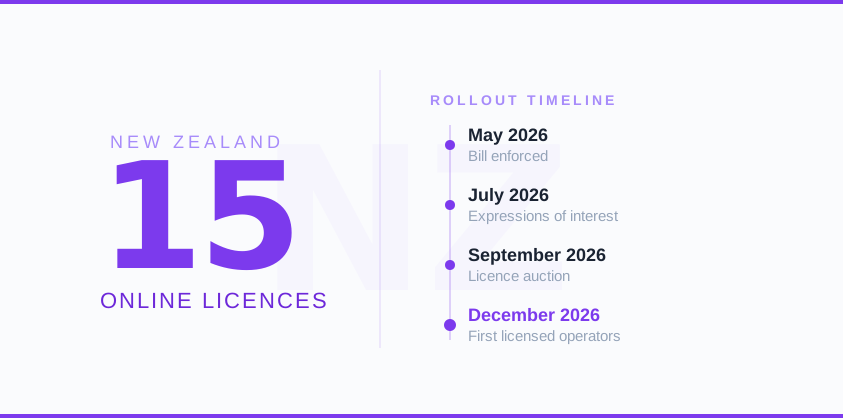
New Zealand’s Online Casino Gambling Bill is heading for its third reading, with the Department of Internal Affairs confirming a May 2026 enforcement date and a December launch for the country’s first regulated online casino market. Entain and SkyCity Entertainment Group have already signalled interest in the 15-licence auction, which the government expects to hold in September.
A 15-licence cap backed by channelisation data
Paul James, Chief Executive of the Department of Internal Affairs, used a recent keynote at the Regulating the Game conference in Sydney to defend the 15-licence cap, citing internal data showing that more than 95% of New Zealanders gambling online already do so on roughly 15 offshore platforms. The cap is intended to preserve consumer choice while channelling players toward regulated operators. James estimated that New Zealanders gambled NZ$1.3 billion online in 2025, up 10% year-on-year.
Declared revenue subject to the existing 12% online gambling duty reached NZ$520.8 million in the 12 months to 30 June 2025, with industry sources putting actual spend at NZ$700 million to NZ$800 million once undeclared offshore activity is included.
Timeline tightens around a May to December runway
The revised implementation schedule, set out by Programme Director Trina Lowry in a stakeholder update, runs as follows: bill enforcement from 1 May 2026, final regulations published in early June, expressions of interest opening in July, licence auction in September, and formal applications from October. The first licensed providers are expected to go live on 1 December 2026.
Operators that apply for a licence before 1 December may continue operating while their application is assessed, with a hard deadline of 1 June 2027 for unlicensed providers to exit. Operators that do not apply by the December cut-off must cease offering services to New Zealand residents from that date.
The cost structure for licensees
The fiscal framework combines multiple levies. The 12% online gambling duty rises to 16% from 1 January 2027, with the additional 4% ringfenced for community returns and distributed through the Lottery Grants Board. Cabinet papers estimate first-year community returns of NZ$10 million to NZ$20 million, depending on licensed market GGR.
Licensees also face a 1.24% problem gambling levy, 15% GST, an expression of interest fee of up to NZ$19,000, and a general licensing levy of up to 5% of New Zealand GGR. Each licence covers a single platform, with a cap of three licences per provider.
Operators move early
Entain Australia and New Zealand and SkyCity Entertainment Group are the first major operators to publicly confirm plans to bid. Entain currently holds an exclusive sports betting position through its TAB NZ partnership and the Betcha brand. On a recent investor call, Chief Financial Officer Rob Wood said the group is targeting three of the 15 licences and estimated the addressable market at around £600 million, against Entain’s current NZ revenue of less than £200 million.
SkyCity has framed its interest around its existing land-based footprint and responsible gambling track record, with the group describing any move into the regulated online market as an extension of its current consumer protection standards.
Enforcement teeth and political risk
From 1 May 2026, the Department of Internal Affairs gains extraterritorial enforcement powers. Maximum penalties rise to NZ$5 million for companies and NZ$300,000 for individuals, a sharp increase from the current NZ$10,000 advertising breach ceiling. The regulator will also be able to issue take-down notices and enforceable undertakings.
The bill cleared the Committee of the Whole House with limited amendments and is awaiting scheduling for its third reading. The New Zealand Labour Party opposes the legislation, with committee members citing the 15-licence cap as too permissive and raising concerns about consumer protection gaps. A formal post-implementation review is built into the framework and will take place two years after market launch.
TGJ Take
New Zealand’s sequencing is the unusual part. Most regulators tightening the online casino market lead with advertising restrictions and harm-minimisation rules, then build a licensing framework. New Zealand has done the opposite, deliberately choosing structural licensing first and reserving broader advertising controls for a post-launch review. For operators, that sequencing is friendlier than the Australian approach it has explicitly declined to copy.
The economics of the licence auction are the more interesting story. With Entain openly targeting three of 15 licences and SkyCity publicly positioning, at least four licences are already effectively spoken for among operators with existing New Zealand exposure. That leaves roughly 10 to 12 for the rest of the market, and the licensing levy structure, capped at 5% of GGR on top of a 16% duty and 1.24% problem gambling levy from 2027, prices in meaningful headroom only for operators with disciplined cost bases. Affiliates planning New Zealand entry strategies should be mapping brand positioning now, because the twelve months between May enforcement and the first full calendar year of licensed operation will determine which operators own the new regulated brand landscape.