KSA Grants De Opkikker 2-Month Lottery Licence With 20K Cap
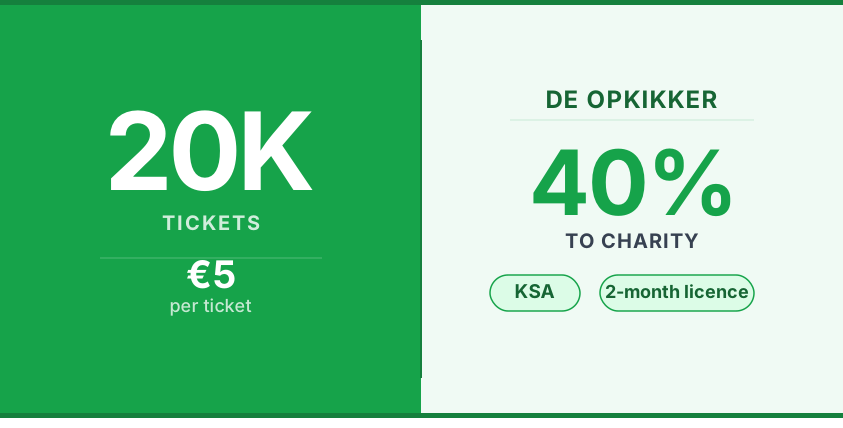
Sales are limited to 20,000 tickets at €5 each, and at least 40% of the net proceeds must go to “Opkikkerdagen” support events for families with long-term illness. The licence falls under the Wet op de Kansspelen, which allows this type of lottery only when it serves a public-interest purpose, and it includes standard requirements such as clear prize and tax disclosure, notary oversight of the draw, and a full financial report after completion.
The structure leaves little flexibility on the commercial side. Revenue is capped by ticket volume and price, and a fixed share must go to the stated cause. For any organisation running a similar setup, this means the outcome is largely predetermined: the model works as a controlled fundraising tool, not as a scalable revenue stream.
Operationally, the burden sits in compliance and reporting. The requirement for a notary, audited accounts, and strict timelines adds cost and process, even for a short-term lottery. Smaller organisations can run these draws, but they need external support to meet the reporting standard.
For operators and suppliers, this is a clear signal on how the Dutch market treats lotteries. There is no room to build a broader product around this licence type. The opportunity lies in execution services such as distribution, compliance handling, or administration, not in expanding the model itself.
TGJ Take
This licence is less about running a lottery and more about strict cost control. With ticket volume fixed and at least 40% of proceeds locked for charity, there is no room to improve margins or scale the model. Smaller operators or organisations without existing infrastructure will struggle to justify the setup and reporting costs. For suppliers, the only realistic play is compliance and admin support, not product expansion. If you are assessing the Dutch market, this format does not offer a growth path.