Italy’s UIF Tightens AML Reporting for Gaming Operators in July
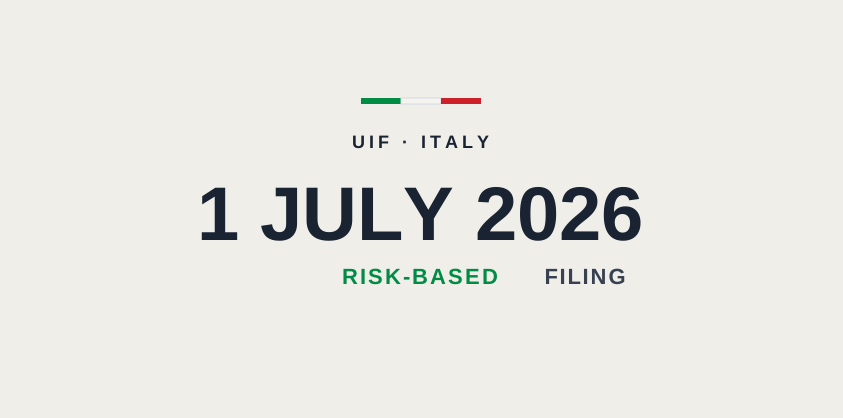
Italy’s gambling operators will follow new AML reporting rules from 1 July 2026. The Unità di Informazione Finanziaria per l’Italia issued the measure in Rome on 18 December 2025. UIF Director Enzo Serata signed the instructions, now published in the Italian Official Gazette and on the UIF website.
The instructions replace the UIF’s framework from 4 May 2011. They implement obligations under Legislative Decree No. 231/2007, as amended in 2017 and 2019. The new rules sit alongside the UIF’s anomaly indicators from 12 May 2023. The text was prepared with input from the Guardia di Finanza, the Direzione Investigativa Antimafia, sector supervisory authorities and self regulatory bodies, following a public consultation.
The central shift is the UIF’s move away from mechanical reporting. A transaction crossing a monetary threshold will not justify a report on its own. Neither will a request for information from authorities or negative news about a customer. Each report must instead follow an assessment of the anomaly against the customer profile and the information available to the operator.
For gaming companies, that means showing why a betting account, retail transaction, distributor pattern or customer behaviour is genuinely suspicious. Filing defensively will no longer pass review. For public gaming concessionaires, this does not create a separate AML regime for gambling alone. It raises the bar on how operators identify, assess and document risk.
Italy is not alone in pushing operators toward risk based reporting. The EU’s wider AML reform package, including the new AMLA authority based in Frankfurt, has pressed national regulators to move past threshold triggers and toward documented judgment. UIF’s update brings Italian gaming operators in line with that direction, ahead of EU level rules that will apply more broadly from 2027.
That EU context explains why the UIF is also opening the door to artificial intelligence tools for anomaly detection. The regulator is clear these systems can only support the process, not replace it. A human review remains required before any final decision to report, so the UIF allows technology into the workflow while keeping accountability inside the business.
Operators can also share information on connected anomalies where transactions show common features, subject to AML confidentiality rules. For larger gambling groups and retail networks, that closes a gap AI tools alone cannot, since it lets compliance teams trace linked activity across accounts, shops, distributors or operating channels rather than spotting flags in isolation.
The feedback loop ties these pieces together. The UIF will assess report quality at least every six months, distinguishing those lacking risk indicators from those judged low risk. That gives operators a concrete benchmark for updating detection rules, analyst training and escalation processes, rather than guessing whether their filings meet the new standard.
The measure also formalises the SOS contact person and internal procedures, which must support effectiveness, speed and confidentiality. The decision to report, and the filing itself, cannot be outsourced. The instructions define gaming activity broadly: operations include activity through gaming accounts and individual transactions, and relevant parties can include distributors and retail operators in the sector.
💡TGJ Take
This is not a new AML burden, it is a tougher test of judgment. Operators have until July to build an audit trail showing how each alert was assessed, not just that a report was filed. Compliance teams covering betting accounts, retail shops and distributor networks should expect scrutiny on judgment calls, not volume. AI tools can flag patterns, but the UIF keeps the human sign off and the liability with the operator.