ANJ Gives French Operators GDPR Playbook Before World Cup
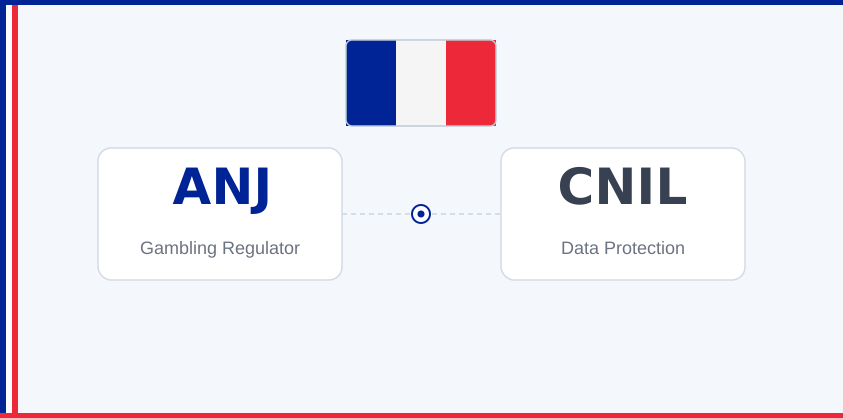
France’s Autorité Nationale des Jeux (ANJ) published a practical GDPR guide for licensed gambling operators on May 27, in collaboration with the country’s data protection authority, CNIL. The document helps operators align player data processing with French gambling duties on safer gambling, marketing, and anti-money laundering controls.
Where the Tension Sits
Operators process large volumes of personal data as part of account management, player monitoring, commercial marketing, and compliance checks. All of these activities must comply with the EU’s General Data Protection Regulation of 27 April 2016.
The guide addresses a gap that licensed operators flagged directly. These operators reported challenges in the coordination between GDPR rules and French gambling-specific obligations, particularly where player data must be processed to detect excessive gambling and combat money laundering and terrorist financing.
Three areas receive dedicated treatment in the document: player account management and marketing, prevention of pathological or excessive gambling, and anti-money laundering and counter-terrorist financing measures. Both the ANJ board and the CNIL board reviewed it before publication, and all licensed operators were consulted before final publication.
World Cup Timing
Publication came two weeks before the FIFA World Cup, a period ANJ expects to drive heavier promotional activity across betting brands. The regulator had already called on operators and broadcasters to exercise restraint in World Cup advertising, out of concern for vulnerable groups’ exposure to gambling marketing.
Beyond data protection, ANJ also introduced an algorithm for licensed operators to support earlier detection of excessive gambling behaviour. A scientific committee validated the tool and benchmarked it against the Canadian Problem Gambling Severity Index.
TGJ Take
France does not simply direct operators to comply with GDPR. The guide shows where privacy law meets gambling risk controls, and that distinction matters for how compliance teams structure their work. For licensed brands, the core issue is documentation: how player data is collected, why it is used, and how long it is kept will need to stand up to scrutiny from both ANJ and CNIL. With World Cup marketing set to increase, CRM teams should treat this guide as an operational checklist, not a legal side note.