
Polymarket’s UMA Vote Concentration Raises Dispute Risk
Polymarket’s dispute model is under pressure. A Bloomberg analysis cited in the source materials found that nine anonymous crypto wallets have gained outsized influence over who wins and loses in the platform’s most contested markets. Close to 2,000 Polymarket contracts were challenged and resolved through the UMA vote process over the past year.
In April alone, 230 disputed contracts with more than $1bn in trade volume were settled through the process, up from 79 contracts six months earlier. The disputes covered markets tied to wars, elections and geopolitical conflicts.
Under Polymarket’s rules, when a contract outcome is challenged, the dispute goes to holders of UMA, an independent cryptocurrency. The model was designed to create a decentralised resolution process, but voting power has concentrated among the largest UMA token holders.
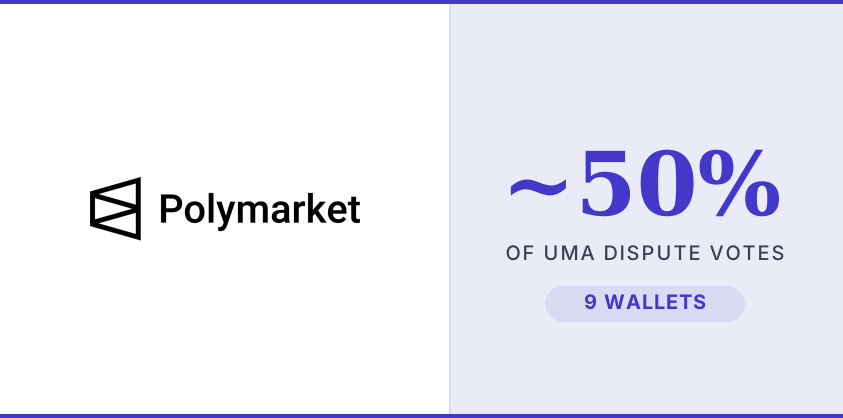
According to the Bloomberg analysis, nine wallets accounted for roughly half of all UMA tokens used in Polymarket resolution votes over the past three years, out of more than 6,400 accounts that took part in at least one dispute. The nine wallets almost always voted together and backed the winning position.
That concentration has drawn criticism from traders who say large UMA holders can tilt outcomes in their own financial interest. Jan Czarnocki, general counsel at prediction markets startup Elastics, said “no serious investor” would put money into the system without transparency over resolution criteria. Czarnocki lost money in a UMA dispute linked to whether US forces entered Iran earlier this year and described the process as “a discretionary use of power.”
For its part, Polymarket said it is committed to stronger infrastructure and a higher standard for prediction market resolution. The company can overrule UMA decisions but has rarely done so, according to the source materials.
Risk Labs, the team behind UMA, and Polymarket said last year they planned improvements or a replacement for the mechanism. Eigen Labs, which worked with Polymarket and Risk Labs on the update, has since put the project on pause. Eigen Labs founder Sreeram Kannan told Bloomberg: “The focus has been on market expansion from Polymarket’s end. We haven’t actually been working on that for the last several months.” Polymarket declined to answer questions about changes to the UMA process, and Risk Labs did not respond to requests for comment.
The dispute governance issue sits alongside broader challenges for Polymarket as the company moves away from its crypto origins toward traditional finance. The company attracted investment from Intercontinental Exchange and handled $9bn in bets on its main platform last month. At the same time, it has faced technical problems and lost trade volume share to rival Kalshi.
Kalshi uses a different model. When a contract is challenged there, company employees make the final call. That approach has also drawn complaints over a lack of transparency in decision-making.
TGJ Take
Polymarket’s problem is not that disputes exist. The real issue is that high-value markets can end up decided by a small group of token holders whose financial incentives may not match those of the traders who place bets. For operators and investors, resolution governance has moved from a technical footnote to a measurable risk. Affiliates and media brands that cite Polymarket odds on geopolitical events should also take note: disputed markets can move on UMA vote expectations, not on real-world developments.