Galaxy Posts 19% EBITDA Growth, Enters 2026 Sitting on HK$35B Net Cash
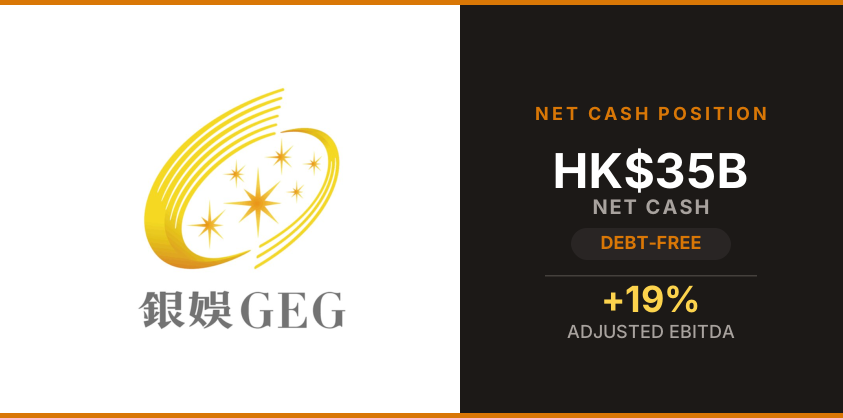
Galaxy Entertainment Group closed 2025 carrying HK$36.3 billion in cash and liquid investments against just HK$1.3 billion in debt, according to annual results published February 26. That HK$35 billion net cash position is effectively bankrolling the group’s entire Macau development pipeline without any external financing.
Adjusted EBITDA for the year came in at HK$14.5 billion, which Chairman Francis Lui described as a 19% improvement over the HK$12.2 billion posted in 2024. Shareholders saw net profit rise 22% to HK$10.7 billion. The board recommended a final dividend of HK$0.80 per share for June 2026, adding to interim payouts of HK$0.50 and HK$0.70 already distributed during the year.
Galaxy Macau drove most of the growth. In Q4, revenue reached HK$11.8 billion, up 29% year-on-year, while EBITDA rose 41% to HK$4.0 billion. Mass GGR increased 17% to HK$8.7 billion. VIP GGR more than doubled to HK$3.1 billion, helped by HK$731 million in favorable hold. Outside gaming, the group hosted around 350 events during the year, lifting non-gaming revenue to 125% of 2019 levels.
Capella, the group’s new 95-suite tower, fully opened in February 2026 after a soft launch in May 2025. Early feedback has been good, and CBRE analysts raised their price target, expecting it to bring in more high-end players over the next two years. The next project, Phase 4, will add about 1,350 rooms and a 5,000-seat theater, with completion planned for FY27. StarWorld Macau is still behind, with revenue down 7% to HK$5.0 billion and EBITDA down 13% to HK$1.4 billion, mainly due to renovations set to finish by early 2027.
For other operators in Macau, the difference is clear. Many still carry higher debt and need to think about interest costs when planning new projects. That can slow down expansion or force changes in timing. Galaxy does not face that pressure. With HK$35 billion in net cash, it can fund projects like Capella and Phase 4 on its own, keep timelines on track, and avoid extra financing costs while others remain more cautious.
TGJ Take
This is not just about strong results, it is about how Galaxy is funding its growth. While others deal with debt and higher borrowing costs, Galaxy is using its own cash to keep projects moving. That gives it more control and fewer risks. The main concern now is StarWorld, where EBITDA fell 13%. If results do not improve after the renovation, that decline could start to weigh on overall margins. The next key update comes with the H1 2026 results, when Capella reports its first full quarter.