
Indiana Bans Sweepstakes Casinos, Poker Games Stay in Play
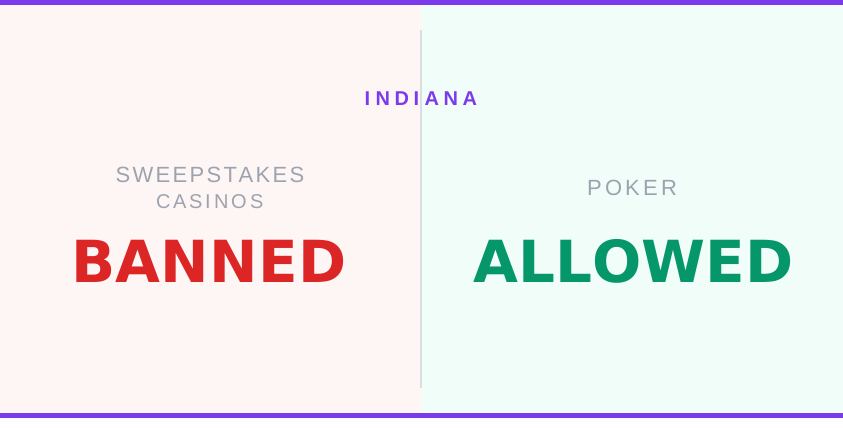
Governor Mike Braun signed the bill, setting a July 1, 2026, deadline for sweepstakes casinos to exit the market. These platforms relied on dual-currency models to operate outside standard rules, and that route is now closed. The approach is direct, aimed at tightening control and bringing clearer terms for players.
The law leaves poker untouched, which gives operators a stable position while other formats are removed. Peer-to-peer games continue as before, and that clarity helps with planning. It also shows where regulation is going. Skill-based formats are being kept, while chance-driven models face tighter rules, so operators need to adjust in that direction.
Indiana’s move resets the setup for both sides. Poker operators get stability with no immediate rule changes, which helps with planning. Sweepstakes operators face a clear exit path, so they need to pivot quickly or leave the market.
States like California and New York have already moved against dual-currency models, and Indiana is following the same path. As more states take this approach, the rules become more consistent, giving operators clearer direction on what works and what doesn’t.
Regulators are taking a more direct approach to how these models operate. That points to closer checks on payout structures and how platforms handle user funds. For companies, staying up to date becomes critical, as gaps in compliance are less likely to go unnoticed. For users, clearer rules and regular oversight should reduce uncertainty around how these systems work.
TGJ Take
July 1 is the cutoff, but operators need to act before that. Sweepstakes brands still active in Indiana should already be planning an exit or a pivot, while affiliates need to check which partners rely on these models and adjust traffic early. The bigger point is enforcement — the state isn’t trying to regulate sweepstakes casinos, it’s removing them, and if others follow, this could reshape how these operators function across the US.