Massachusetts iGaming Push Stalls After Bill Sent to Study
Massachusetts lawmakers have paused efforts to legalise online casino gaming after sending a key House proposal to study on March 17, a step that usually ends a bill’s progress for the current session. The decision followed a period of lobbying supported by conflicting polling on public opinion.
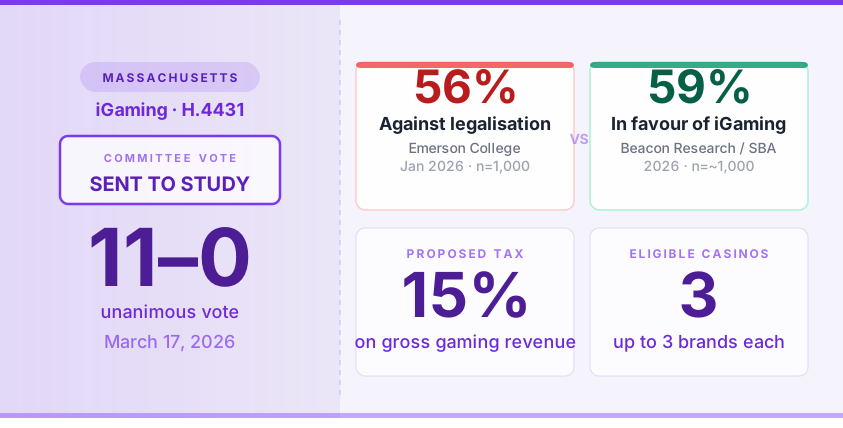
H.4431 outlined how online casino gaming could be introduced in Massachusetts. The plan put the Massachusetts Gaming Commission in charge of oversight, gave each of the three existing casinos the option to run up to three online brands, and set the tax on revenue at 15%. Despite that structure being in place, lawmakers voted 11–0 to send the bill to study, which effectively stops it from moving forward this year.
Public opinion became part of the push around the bill, but the data pointed in different directions. A January 2026 survey by Emerson College Polling, based on responses from 1,000 residents, showed that 56% were against legalising online casinos, compared to 28% in favour. Concerns in that poll centred on access and addiction, with many respondents linking round-the-clock availability to higher risk.
Another poll, carried out by Beacon Research for the Sports Betting Alliance, suggested the opposite. Using a similar sample size, it found 59% support for legal iGaming, with 24% opposed. In that case, respondents reacted more positively to arguments around regulation, tax income, and shifting activity away from offshore sites.
Outside the polling, several groups pushed back on the proposal. Labour organisations warned that online gaming could reduce demand at physical casinos. An Encore Boston Harbor representative pointed to around 1,800 jobs tied to its operations. State Treasurer Deb Goldberg also voiced opposition, raising concerns about pressure on lottery revenue and broader social impact.
Other bills are still technically in play, but none have progressed. Measures such as S.235 and H.332 proposed similar frameworks, with higher tax rates of up to 20% and more licences available. They remained in committee earlier in 2026 and did not advance alongside H.4431.
TGJ Take
The committee vote sets the near-term outcome. Massachusetts moves off the active expansion list for operators until a new bill is introduced. Polling has shaped the messaging on both sides, but it has not shifted legislative timing. For affiliates, this is not a market to plan around in 2026. The next signal will come from a fresh legislative push, not another round of surveys.