
Virginia Splits on Gambling Bills as Skill Games Advance
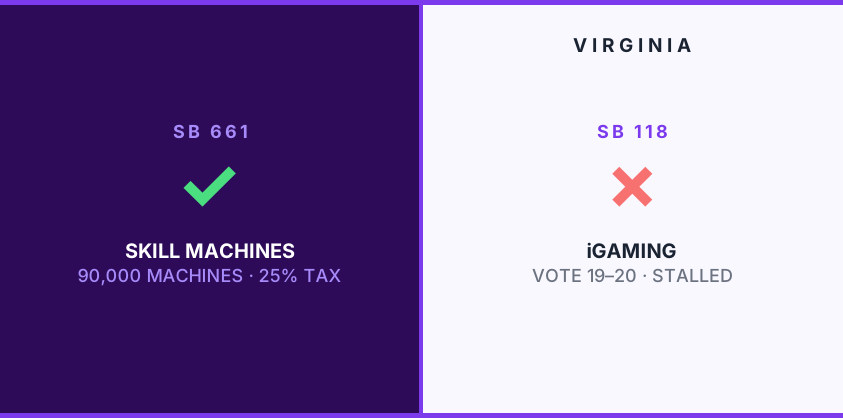
Virginia lawmakers took diverging positions on gambling expansion in February and March 2026, delaying online casino legislation while advancing a bill to regulate skill machines. A Senate subcommittee initially rejected both SB 118 and SB 661 in February, but the two measures followed different paths in the final weeks of the session.
The iGaming proposal, SB 118, aimed to legalise online casino play under oversight from the Virginia Lottery. It stalled at subcommittee level before returning to the Senate floor. Senators first voted it down 19–20, then brought it back and approved it 19–17 later that day. The proposal set out a potential launch date of July 1, 2027, along with rules on player protection and a central regulatory structure. Even with that progress, the Senate and House did not align before the session closed in March 2026, so the bill did not move forward.
A different outcome followed for SB 661. The measure focuses on slot-style machines already placed in everyday retail settings such as convenience stores. Lawmakers revisited the bill after early pushback and pushed it through both chambers before adjournment. It applies to an estimated 90,000 machines across the state and sets out how they would be taxed and licensed. The framework includes a 25% tax rate and limits tied to where the machines can operate. Final approval now depends on the Governor.
Discussion around both proposals centred on control and exposure. Senator Adam Ebbin pointed to the presence of gambling in common retail spaces. Jeremy McPike said earlier drafts did not include enough safeguards. Mamie Locke questioned expanding access while unregulated machines remain widespread.
Backers of both measures focused on oversight and tax capture. Operators such as Caesars and Boyd Gaming supported the iGaming route and pointed to results from other regulated US markets. On the retail side, business owners supported SB 661 as a way to bring existing machines under clear rules instead of leaving them outside formal control.
The result leaves a split direction. Sports betting and land-based casinos are already in place. Retail machine regulation is now close to completion. Online casino legislation remains unresolved, with close votes and differences between chambers still holding it back.